
Call / 07815 167247
Email [email protected]
Call / 07815 167247
Email [email protected]
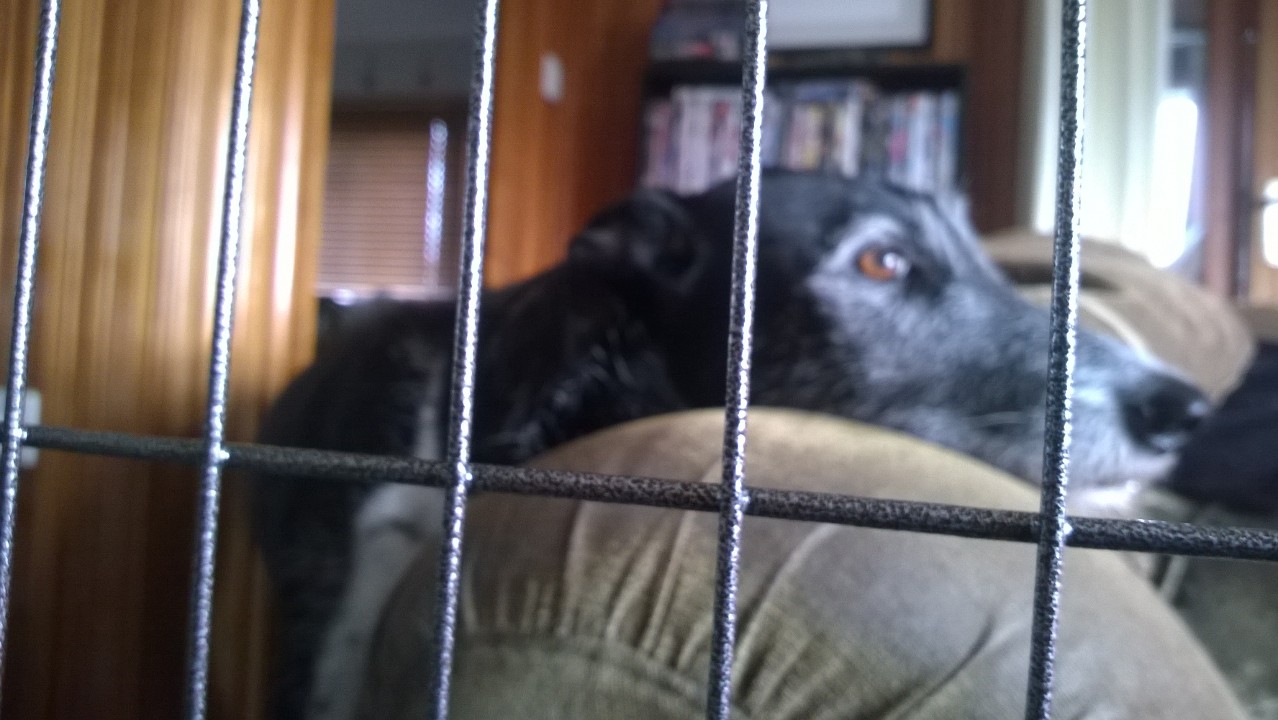 Most of the time, when something isn’t working with our dogs, we feel we should be training. Doing something. Fixing it. Making progress. But sometimes that’s not what’s needed at all. Sometimes the goal is simply to make a situation work.
Here's a little case study for you about how I worked with visitor dogs to my own home.
We were lucky enough to have a long lounge with a door at each end, so we set up a barrier across the middle of the room. I knew one of his dogs wouldn’t cope well if she could see the others, so we covered the barrier with thick blankets. Nothing was left nearby that could be used as a launch pad.
It’s a set-up I’ve seen work well in other situations too. Families with young children often do something similar. The space is divided so the dog has an area where they don’t need to be constantly managed, and the child has somewhere to play without everything being snatched or interrupted. It gives everyone a bit of breathing room.
Now your house might not be the same, but I have worked with plenty of clients from those with completely open plan spaces to smaller rooms, and there is always a way to make playpens, kiddy gates and doors work.
Back to my Dad’s dogs. Toilet breaks were managed. People could move in and out easily using the doors at either end. If any of the dogs drifted too close to the barrier, they were quietly guided back.
His dogs were small, but mine could have looked over, so we made sure they didn’t approach.
Walks happened together on lead. There was no pressure for the dogs to interact or “get on”.
There was also no expectation of change. And that made a big difference. Everyone could relax.
Alongside all of that, there was some quiet learning happening. My dogs got used to the presence of the others, at a level they could cope with. They were already familiar with barriers and gates, so nothing felt new or overwhelming.
But that wasn’t the focus.
The focus was making the situation work. And it did.
Because the question wasn’t “how do I train this?” and make the holiday feel like a chore.
It was “what is this moment for?”