
Call / 07815 167247
Email [email protected]
Call / 07815 167247
Email [email protected]
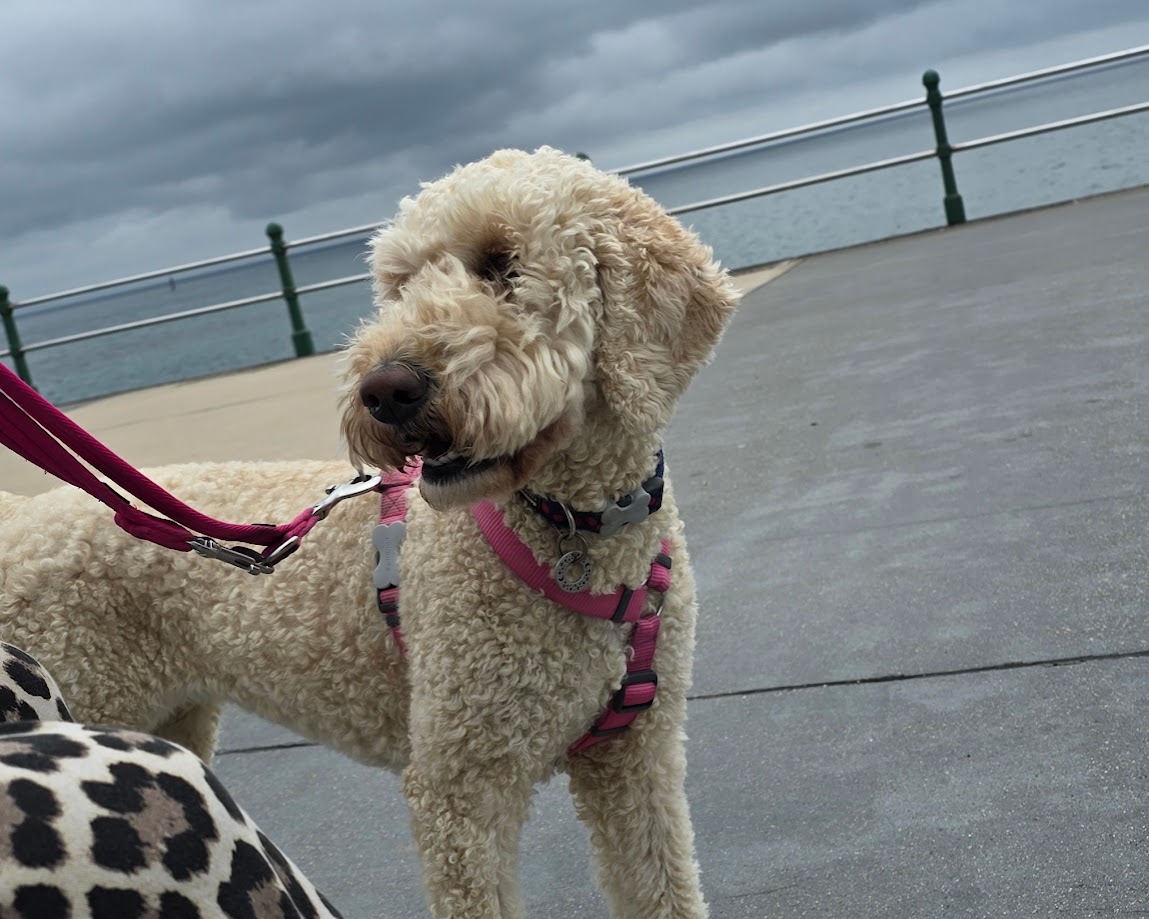
One of the simplest and most useful tools we now have in dog training is video.
Not because it’s clever.
Not because it’s high tech.
But because it shows you what actually happened.
In the moment, when something goes well or badly, your brain is full. You are thinking about what to say, what to do with the lead, where the other dog is, whether someone is watching. You see the headline of what happened.
Video shows you the detail.
Very often I will start a session by reviewing a client’s video. We slow it down. We watch it more than once. And each time something new appears.
If you want to try this yourself, start simple. Film your dog doing something straightforward. A sit. A recall. A short piece of lead walking. Then watch it back properly. This is roughly how I do it:
Watch once with the sound off.
This stops you being led by tone of voice and lets you focus on movement and timing.
Watch the dog.
What do they do first? Where do they look? How quickly do they respond?
Watch the human.
What are your hands doing? Where is your body facing? Are you clear?
Watch how the dog responds to the human.
Does your dog hesitate? Lean away? Look confused? Move in quickly?
Watch how the human responds to the dog.
Do you repeat cues? Move too fast? Reach into your pocket before the behaviour is complete?
Look at the wider environment.
What else is influencing the moment? Noise? Movement? Another dog? Your own tension?
Then watch it again. You will see something else.
Very often we discover that we are not as clear as we think we are.
None of this is about blame. It is about clarity.
Don’t wait for something dramatic to happen.
Set your phone up on a wall or fence. Or ask someone to film you for two minutes.
Pick something simple. A sit. A recall. A short stretch of lead walking.
Don’t perform. Don’t try to be perfect. Just do what you normally do.
Then watch it back later when you are calm. Not to judge yourself. To observe.
You will almost certainly see something you didn’t notice at the time.
If the behaviour you see on video is not the behaviour you thought you were asking for, that is useful information.
Adjust one thing.
Film again.
Watch again.
Video gives you distance. Distance gives you clarity.
And clarity is far more useful than guesswork.