Call / 07815 167247
Email [email protected]
Call / 07815 167247
Email [email protected]
Clients often ask if something their dog does is “okay.”
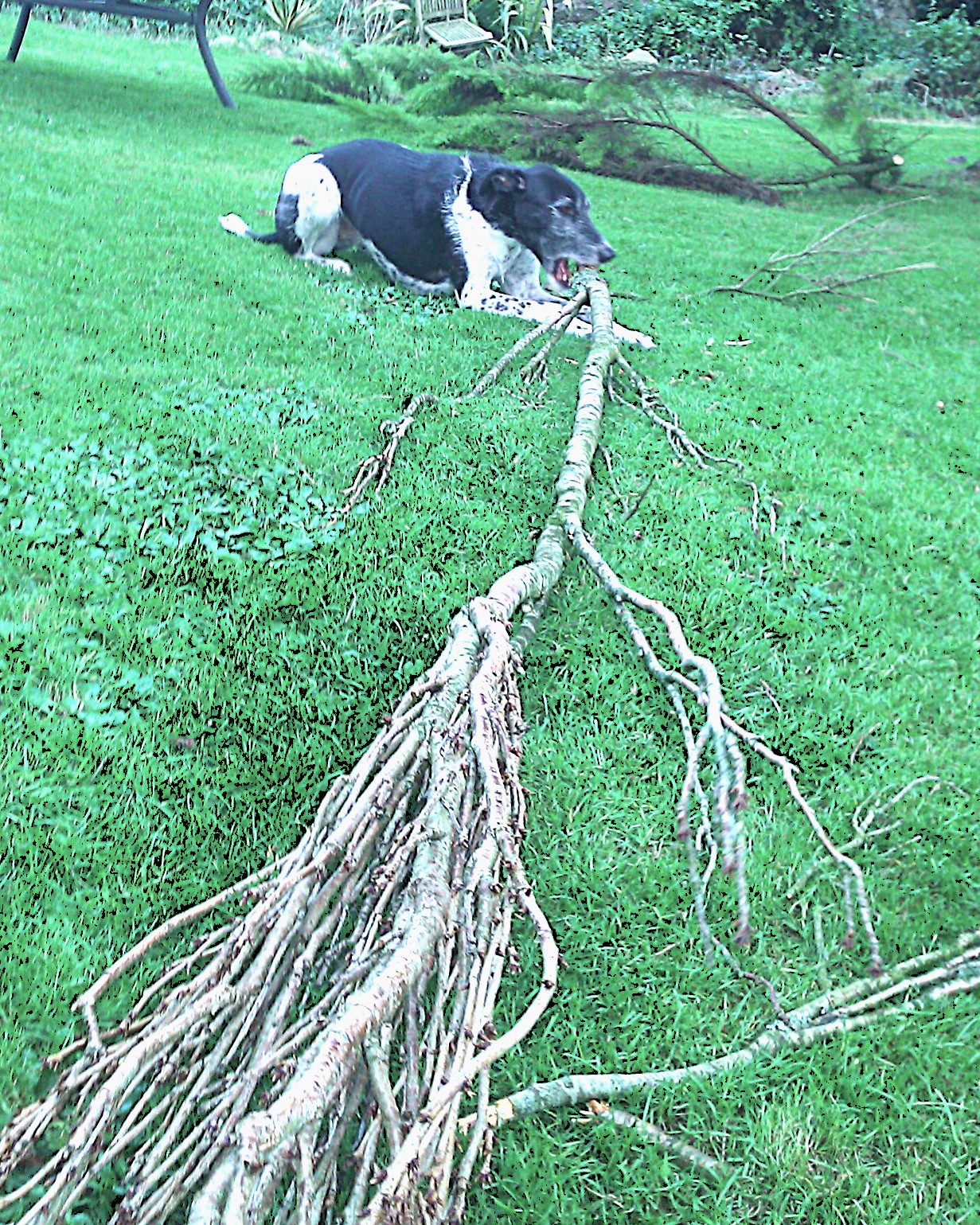
It might be hiding toys in the garden, digging up a patch of turf, jumping up to say hello, barking at the window, curling up on the sofa ... or chewing large sticks in the garden when I am trying to clear up!
And the truth is, very few things are automatically good or bad. It depends on the bigger picture — how it affects you, your dog, and your daily life together.
And that’s where consequences come in.
Every moment with our dogs teaches something. Whether we allow, ignore, or intervene, there’s always a consequence, even if we don’t notice it straight away.
This isn’t about guilt or being perfect. It’s about awareness and choice.
Dogs learn through what happens next. If barking at the postie makes him go away, that feels like success.
If jumping up earns a hand on their shoulders, they’ll keep trying.
If climbing on the sofa leads to a cuddle, that’s a win.
But consequences run both ways.
Sometimes, it’s not about the dog at all — it’s about us. Maybe you don’t mind muddy paws on the bed until the day you’ve just changed the sheets. Or you laugh when your puppy steals a sock, until you realise they now have a full collection.
That’s the thing about consequences: they shift as life does. What’s fine one day might drive you mad the next.
It’s about understanding what’s happening in front of you and responding in a way that works for both of you.
If you’re aware of what your dog is learning, even the things you let go of become conscious choices, not accidents.
You get to decide what matters. And that decision, more than any command, shapes how your dog sees the world.
So when it comes to the day-to-day things, here’s what that looks like in real life.
Take digging, for example.
If your dog’s creating craters in the flowerbeds, that’s frustrating. But if digging feels good for them — cooling off, burning energy, or just for the joy of it — blocking it entirely won’t solve the urge.
You could put up barriers where you need to protect plants and give them an outlet, like a sandpit or a patch where they’re free to dig. Hide a few toys or treats in there so it becomes their “yes” space instead of a “no.”
Jumping up can be the same. For some people, that bouncy greeting is part of their dog’s personality and they don’t mind it. For others, it’s a problem. You can channel it — teach your dog that jumping up on you is fine when invited, but keeping paws down around other people earns the same reward. It’s still joy; it just has boundaries.
Most everyday challenges fall somewhere between management, training, and acceptance.
We protect what matters (like flowerbeds and visitors), we teach alternatives where needed, and we let go of the things that don’t really matter in the bigger picture.
Because balance isn’t about perfection — it’s about knowing what works for you and your dog, and shaping life around that.
Whether it is the muddy paw on your jeans, the evening toy ritual, or the gentle nose when you are working, these little habits and quirks are the texture of life with dogs.
Every household draws its own line between rules and freedom — and that’s okay.
It’s not about getting everything right.
It’s about understanding the consequences, choosing what matters, and enjoying the rest.
If you’re ever trying to work out what’s okay and what’s getting in the way, that’s exactly the kind of thing we can figure out together.