Call / 07815 167247
Email [email protected]
Call / 07815 167247
Email [email protected]
Do you let them off lead here?
Is this footpath actually safe?
What does “dog-friendly” really mean in this place, right now?
How much exercise is right for my dog?
There’s the official guidance—signs, rules, beach restrictions—and then there’s your dog, with their own quirks, sensitivities, and comfort zone. Sometimes those things line up. Sometimes they don’t. And that’s where a bit of thought and flexibility goes a long way.
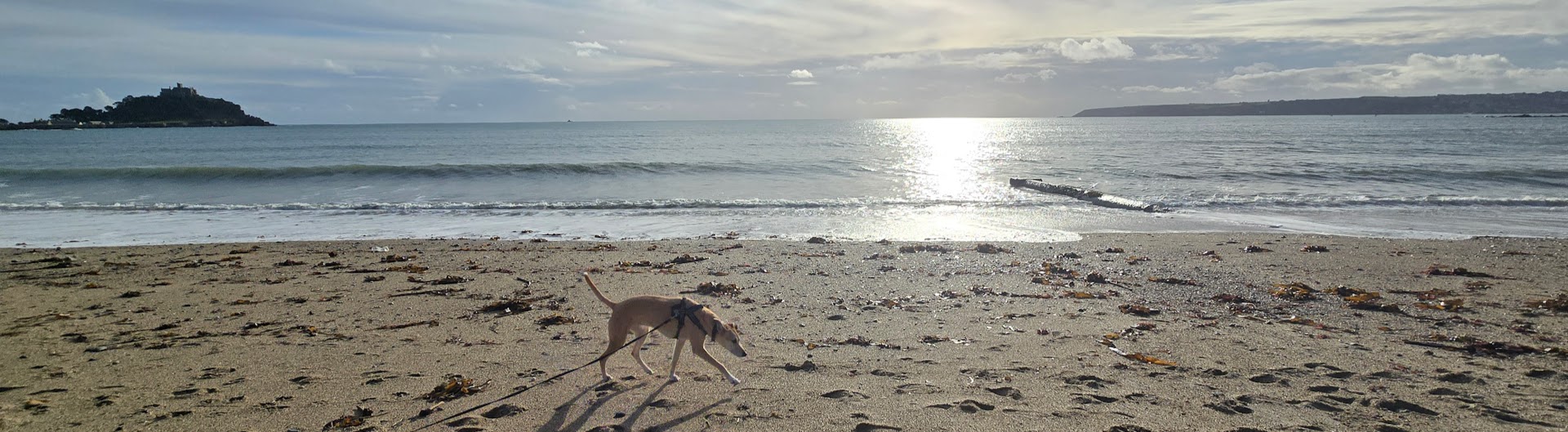
Many people imagine their dog running free across a beach or bounding through a field on holiday. And sometimes that’s a lovely reality. But in other cases, an unknown environment, livestock nearby, or a dog who's a bit unsure can make off-lead walks more stressful than enjoyable.
The reality is that it’s a new environment with lots of fun things for your dog, and being aware of the hazards makes things easier. Down here is Cornwall, these are some of the things to think about, but the principles will apply wherever you holiday:
Adders bask in the hot sun, and undisturbed won’t be a bother—just be aware and stay on the path. Many vets now have adder kits that you can carry with you that offer great first aid advice and treatment.
Beach and seaweed: a little salt water is fine, but if your dog is used to running open-mouthed in streams, they may get a salty surprise in the sea.
Heatstroke: it doesn’t take much in warm weather. Know the signs and take care not to overdo it. There’s good guidance here: PDSA: Heatstroke in Dogs
Mining remnants and cliff edges can be dangerous in unexpected ways. Stick to the lead when needed—it’s not a failure, it’s just smart.
Some of the calmest, most connected walks happen when you take the pressure off and walk together, close and steady. Use a long line if needed. Take the time to read the landscape. And don’t feel like you have to ‘let them run’ just because you’re on holiday.
Many walks go through farmland and conservation areas, too. It’s always worth checking signage, being aware of nesting birds and livestock, and keeping dogs under close control where needed. And during summer holidays, don’t forget that paths can get busy—good to plan around peak times if your dog prefers quieter routes.
What really matters is recognising how your dog copes in a new place. Some feel energised. Others need a few days to settle. Some love the buzz of the beach. Others prefer a quiet mooch along a hedgerow. Tuning in to your dog—rather than a picture of what the walk should be—can make your time together much easier.
And if you decide to skip a walk altogether and hang out in the garden instead? That’s okay too.
Let your dog sniff more than usual—it’s like reading the local news
Take short detours for quiet moments off the main path.
Bring treats and reward check-ins or calm walking.
Build in breaks: a shady bench, a view, or a shared snack.
Keep some walks short and sweet—quality over quantity.
Explore a new surface: sand, moor, woodland, or grass.
🐾 🐾 🐾 🐾
If this blog has resonated with you, and you’d like some help with your dog but don’t know where to start
Take the Lead might be just what you need.
It’s a calm, thoughtful resource designed to help you press pause, clear your head, and make sense of what’s going on.
If you're looking for a way to move forward with more confidence and clarity, this is a great place to begin. It’s a practical, reflective tool you can use on your own—and a gentle introduction to the kind of approach I use to help clients make real progress.
You can head to my Loving Life With Dogs site to find out more:
👉 Take the Lead – A thinking tool for real-life training